- Bottom of the Ninth
- Posts
- 💸 Meet the NFL QB with a $1M Side Hustle
💸 Meet the NFL QB with a $1M Side Hustle
How Kurt Benkert's Dime Lab Football became an viral success.

Tyler Webb
November 12, 2025
In partnership with


Happy Wednesday,
NFL quarterbacks don’t use one ball; they use over 30 (per game).
Each one is meticulously prepped, conditioned, and swapped out constantly to stay dry and grippy. “No NFL player would use a ball straight out of the box,” Kurt Benkert told us. “If it gets wet, it’s ruined.”
That system works if you’ve got equipment staff, unlimited budgets, and 36 balls on the sideline.
But for everyone else (kids, coaches, backyard players), the options aren’t great. It’s either heap toy balls that can’t be thrown or overpriced pro models that are ruined in the rain.
That’s the problem Kurt set out to solve.
This week, Jake and I sat down with Kurt and his co-founder, Matt Blakely, to talk about how they built The Dime Lab: a premium football brand designed to perform like the pros without all the prep. In just over a year, they’ve fulfilled 40,000+ orders, landed in major retailers, and proven that creator-led sports brands can scale without shortcuts.
Master ChatGPT for Work Success
ChatGPT is revolutionizing how we work, but most people barely scratch the surface. Subscribe to Mindstream for free and unlock 5 essential resources including templates, workflows, and expert strategies for 2025. Whether you're writing emails, analyzing data, or streamlining tasks, this bundle shows you exactly how to save hours every week.
5 Takeaways From Our Conversation With Kurt Benkert & Matt Blakely
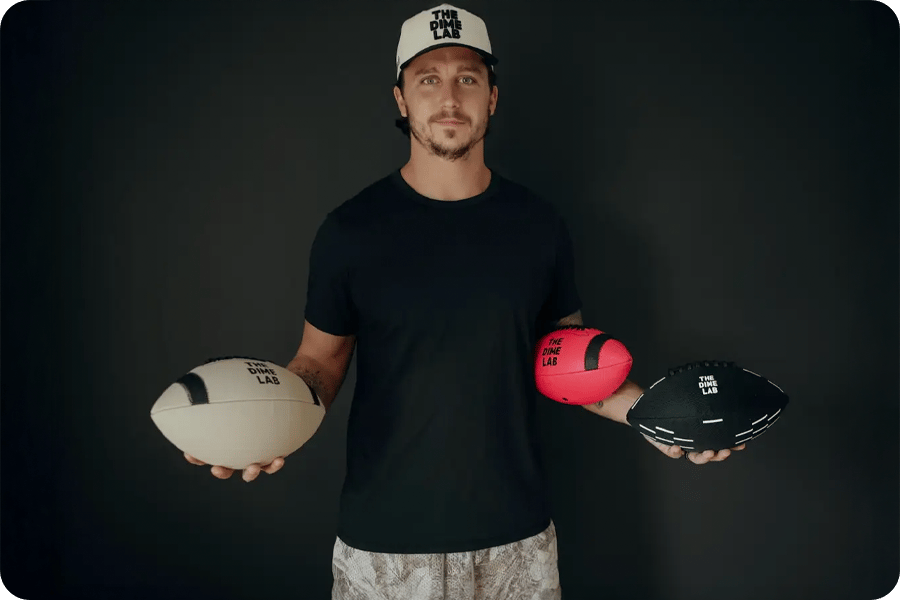
Kurt Benkert, former NFL QB and co-founder of The Dime Lab
1. Game-day feel, no prep required.
Kurt knew most footballs were either “cheap toys” or high-maintenance game balls. So he and Matt engineered their own; something you could take to the beach and run a real route with.
Unlike NFL leather, which absorbs water and degrades fast, The Dime Lab’s proprietary DimeTack™ material repels moisture and stays grippy after getting wet. “You could leave it outside for 30 days,” Matt said, “and it’d still throw like new.”
2. The MVP feature? It ships game-ready.
Pro balls like The Duke take hours to break in. But Dime Lab customers don’t have equipment staff. Every football they ship is:
Inflated
Laces checked
Hand-packed
All at their Florida warehouse, which means it’s ready to throw right out of the box. “No prep, no sting, no waterlogging,” Kurt told us. “Just grip and go.”
3. A lean warehouse team fulfilled 40,000+ orders.
This isn’t a dropshipping operation. Every single order is touched by their team. What started in a garage is now a full warehouse and studio setup in 30A, Florida.
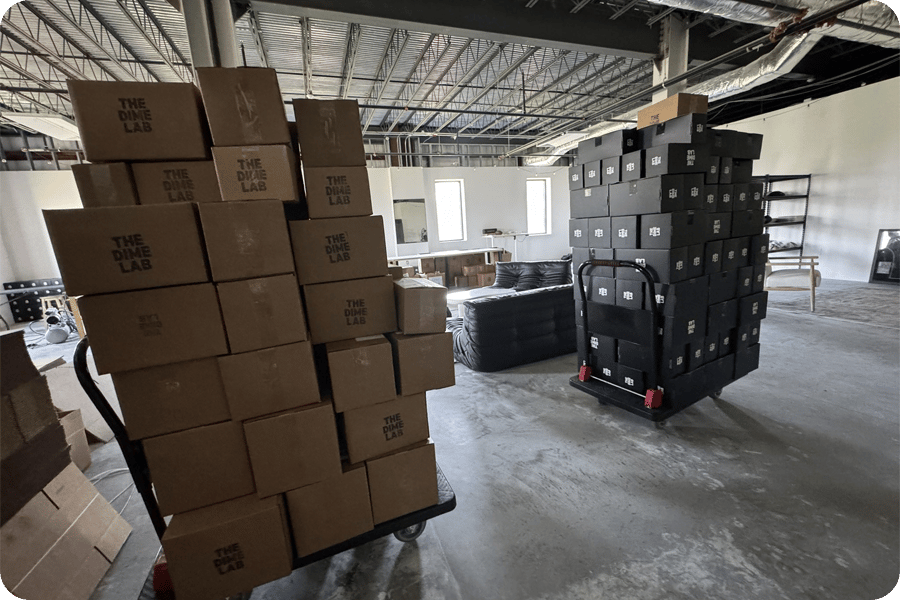
“We’ve moved pallets by hand. We’ve had to cut open shipments box by box,” Matt said. “It’s not efficient, but it works because we’re close to the product and the customer.”
4. Retail is more than a revenue stream; it’s insurance.
Kurt’s built a massive online audience (630K TikTok, 340K YouTube), but he knows that social reach is rented, not owned. “One algorithm change and it’s gone,” he said. Retail flips that equation, letting others sell for them, while bringing the product to customers who might never follow him online.
Update: The Dime Lab currently has the top TWO selling footballs in @SCHEELS! 📈
You guys are incredible and I saw all the tailgating videos this weekend — I can’t thank you guys enough.
Keep slinging it 🤘
— Kurt Benkert (@KurtBenkert)
3:40 PM • Nov 3, 2025
And their bet is paying off: after just one month in Shields, The Dime Lab became the store’s No. 1 and No. 2 selling football.
5. The product is sticky (and not just in your hands).
Their balls don’t just get used; they get collected. With recurring drops, custom colorways, and limited runs, they’ve built a product model that looks more like a sneaker brand than a sporting goods company.
“We’ve seen parents come back and buy the same football in three colors,” Kurt told us. “We’re building for performance, but we’re also building for taste.”
Why It Matters
We talk a lot about the “creator economy,” but The Dime Lab is a rare example of it working at scale, without:
Raising capital
Over-relying on hype
Losing sight of the customer
This isn’t just a merch play. It’s a new kind of brand: athlete-founded, content-native, and built around real innovation.
Kurt and Matt didn’t start by asking what would sell. They started with what sucked and made it better. From that, they’ve created a sticky product, a scalable business, and a roadmap for how modern athletes can build something that lasts long after the final whistle.
📩 And don’t forget: Bottom of the Ninth is back this Friday with the top three stories in sports and business from the week.
See you then,
Tyler & Jake
Reply