- Bottom of the Ninth
- Posts
- 📈 The Most Interesting Sports Creator You’re Not Following (Yet)
📈 The Most Interesting Sports Creator You’re Not Following (Yet)
How Jack Appleby thinks about building sports content, audience, and business

Tyler Webb
January 21, 2026

Happy Wednesday,
Most sports creators talk about growth, platforms, and algorithms. Jack Appleby talks about perspective.
Jack is the creator behind How to Hoop Forever, an adult-athlete basketball brand with more than 150,000 followers and over 20 million views across platforms. He’s also the founder of Future Social, a marketing newsletter with roughly 80,000 subscribers that’s read by senior operators and brand leaders.
This week, Jake and I sat down with Jack to talk about why adult athletes are an overlooked audience, how he thinks about storytelling and series-based content, and why treating content like a business has shaped everything he’s built.
5 Takeaways From Our Conversation With Jack Appleby
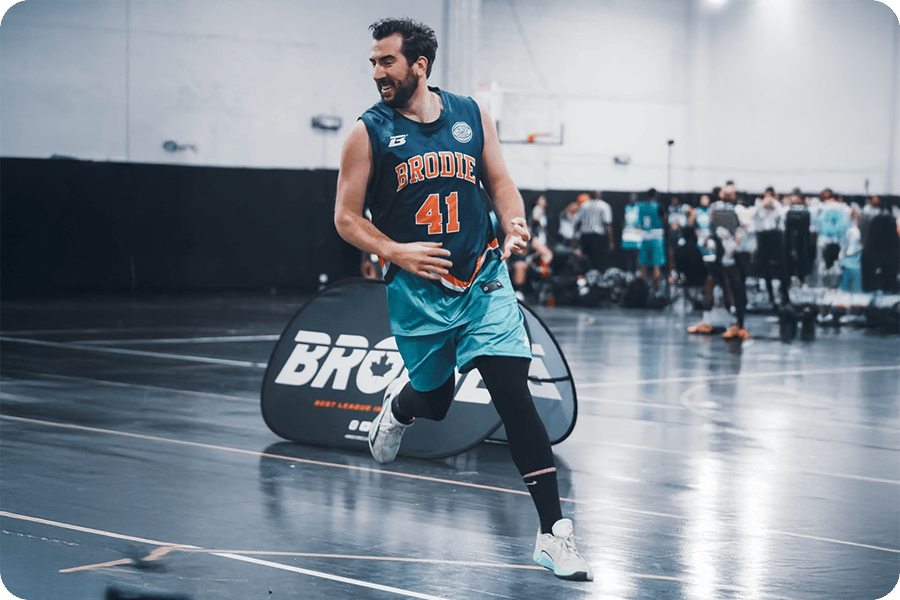
Jack Appleby, founder of Future Social and How to Hoop Forever
1. Jack never set out to be a creator
One of the most important parts of Jack’s story is that content creation was never the goal. His original motivation was career insurance.
As he explained, “I started on Twitter because I worked at the same ad agency for five years and realized I didn’t know anyone else in the industry. I thought if I shared smart things on the internet, I could probably get other jobs.”
That strategy worked. Jack said his last three full-time roles all came from Twitter DMs. Even his job at Twitch started with a tweet about being laid off.
Basketball came later and almost by accident. “I made a couple of basketball videos just for fun. No strategy. And then the third one went viral, and I was like, okay, maybe there’s something here.”
2. Adult athletes are an ignored but powerful audience
How to Hoop Forever isn’t built around youth development, training drills, or elite prospects. It’s built around a 30-something former college player trying to stay competitive in rec leagues, 3x3 tournaments, and semi-pro runs.
Jack was clear about why that works: “There are a lot of people who live vicariously through this,” he said. “I get dads in their 40s with kids who are like, ‘I wish I could still do this.’”
That audience has driven strong performance across long-running series, including:
Building the Perfect Rec Team (14M+ views)
Rec League MVP attempt (7M views)
Pro 3x3 tournament runs (millions of views across series)
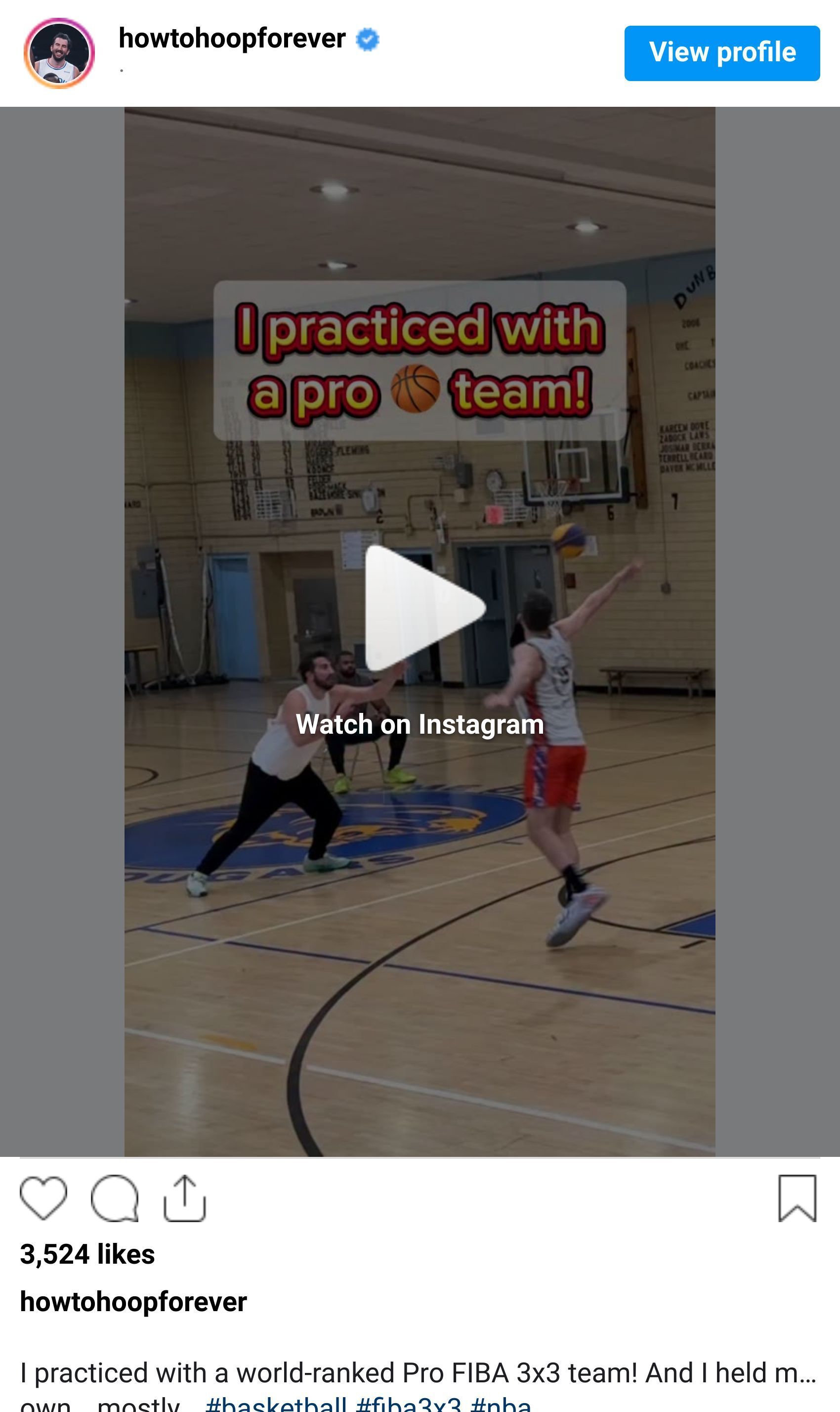
Jack’s takeaway was simple: the sports industry spends most of its time marketing to kids and elites, while a massive adult participation market goes largely untouched.
3. Series matter more than single viral clips
Jack doesn’t think in terms of one-off videos; he thinks in terms of narratives.
He explained that earlier versions of his content leaned too heavily on episode numbers, like “Game 6 of rec league,” which didn’t mean much to a new viewer. The shift came when he started building a clear hook into every individual video, even within a larger series.
Instead of labeling a video as a game recap, he’d frame it as:
As Jack put it, “I’m constantly worried about not only are you going to watch this video, but are you going to come back for the next one?”
4. Perspective > Information
When we asked Jack where sports content is heading, his answer wasn’t about platforms or formats; it was about positioning.
“I generally think the most important thing you can do as a content creator is have a perspective, and have a perspective that people understand,” he said.
He explained why he thinks trying to win purely as a source of information is difficult, and why trying to be interesting without substance is just as hard. What works is giving people something to root for.
“When I give talks to creators, I always say: give your followers something to root for,” Jack said. “People know what I stand for, and that’s why they follow.”
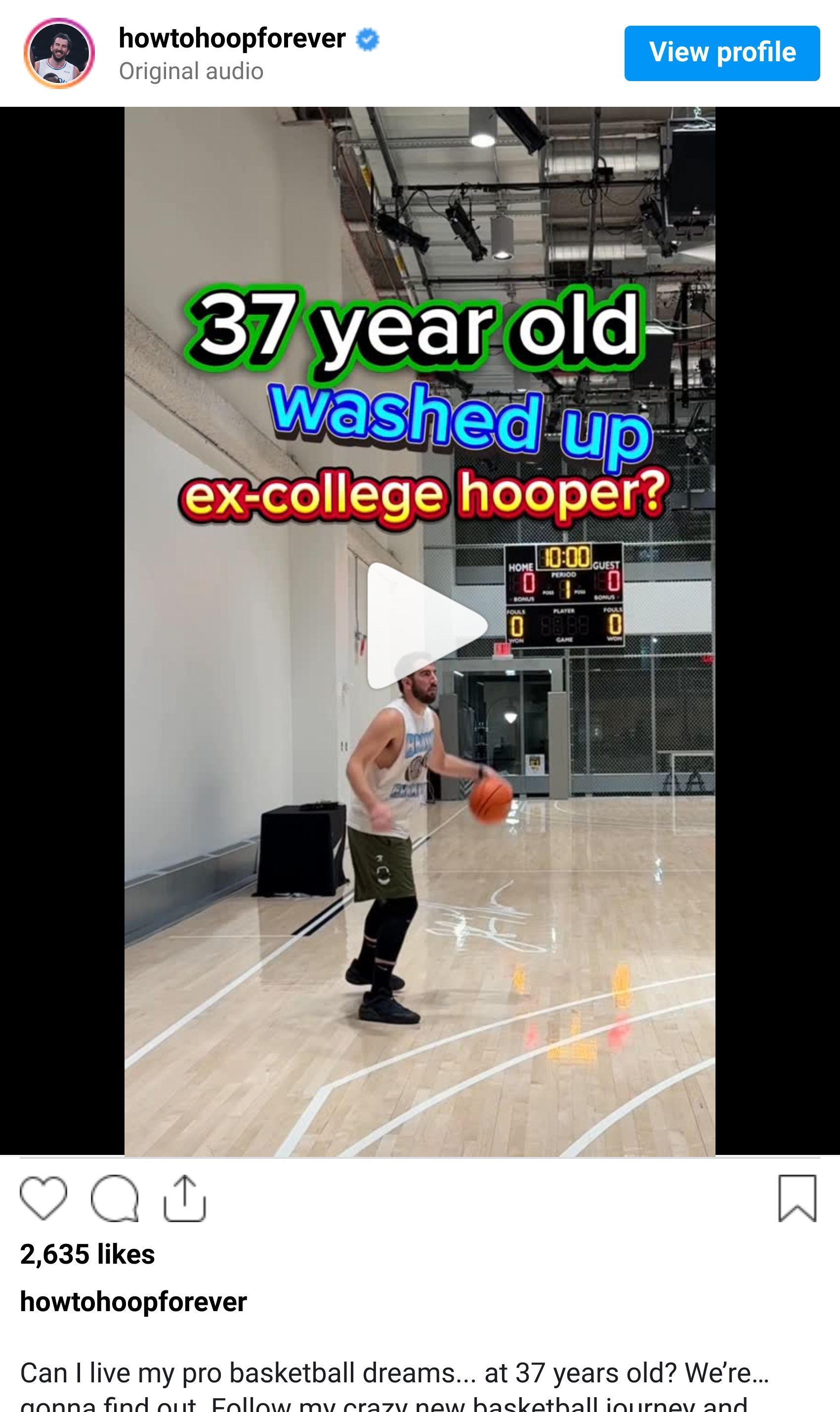
For How to Hoop Forever, that perspective is clear: a regular guy in his 30s chasing a version of competitive basketball that most people assume is gone.
5. He treats both media companies like real businesses
Jack is unusually explicit about separating himself from the idea that content is “just content.” Instead, he calls both of his content projects businesses.
That shows up in how he monetizes. His marketing business drives significantly more revenue through newsletters, speaking, and partnerships. His basketball content is more brand-safe and longer-term, which is why he’s intentionally avoided traditional basketball sponsorships.
Instead, he’s tested partnerships in:
Fitness and wellness
Recovery products
Travel and lifestyle brands
He’s also exploring a crowdfunded pro basketball team model. His pitch is not donations, but access. “If you contribute, you get influence,” he explained, including behind-the-scenes access, design decisions, and regular owner-style updates.
Why It Matters
Sports creators are entering a more competitive phase of the internet. Platforms are saturated, monetization models are shifting, and audiences are more selective about who they follow.
Jack’s approach offers a clear alternative. He builds around perspective, not volume. He prioritizes recurring stories over one-off clips. And he treats content like a long-term business rather than a short-term growth hack.
As he put it near the end of the episode, “Answer the question of why someone should follow you. And that answer should have something to do with who you are.”
📩 And don’t forget: Bottom of the Ninth is back this Friday with the top three stories in sports and business from the week.
See you then,
Tyler & Jake
Reply