- Bottom of the Ninth
- Posts
- 📉 Why Most NFL Teams Lose Money in the Playoffs
📉 Why Most NFL Teams Lose Money in the Playoffs
Plus, I tested the NFL's new 'smart' football

Tyler Webb
January 16, 2026


Last week, I asked for your opinion on prediction markets. Interestingly, an overwhelming majority of you have a “net negative” view on them.
As I described, my feelings are mixed. I think companies like Polymarket and Kalshi simultaneously represent the best and worst parts of our society.
On the one hand, they’re an incredibly innovative way into a market (sports betting) that has historically been considered a duopoly. On the other hand, it feels gross to live in a world where you can put money on “Will Trump Invoke the Insurrection Act?”
In today’s newsletter:
🗞 The Big Story: Why Most NFL Teams Lose Money in the Playoffs
📉 Biggest Loser: What the Hell is Going on with the Las Vegas A’s?
🏆 Winner’s Circle: I Tested the NFL’s New ‘Smart’ Football
🗞 The Big Story
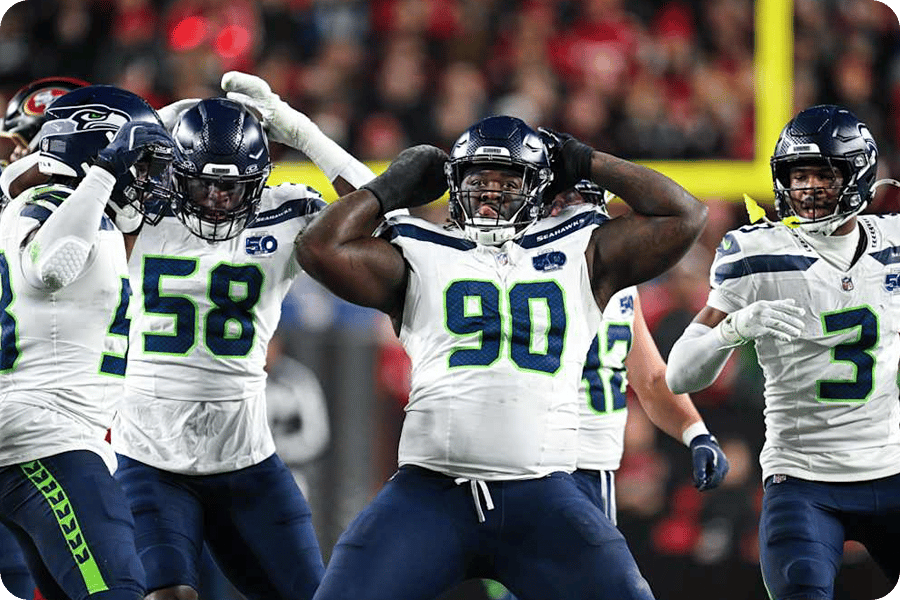
Is it actually a bad thing for your favorite NFL team to make the playoffs? Let me explain…
Background: Even though fans, brands, and networks will undoubtedly spend billions of dollars to watch, sponsor, and air this season’s playoffs, there’s a chance that the teams that are actually still playing will lose money this postseason.
And it’s because, unlike almost every other professional sports league, the NFL is, well… socialist.
According to Forbes, a long playoff run in baseball, hockey, or basketball can generate a team $20-30 million in additional revenue on 50% profit margins.
Most of this is driven by additional ticket revenue, and even though leagues like the NBA, NHL, and MLB do take a 25-60% cut, teams like the Golden State Warriors, who regularly made the Finals in the 2010s, reportedly netted more than $50 million from the playoffs alone even after paying the league.
So if that’s true, then why aren’t NFL teams making the same kind of money in the postseason?
NFL Keeps All Ticket Revenue: Unlike those other leagues, the NFL actually takes 100% of all ticket sales from every playoff game (including the Super Bowl) and then splits that revenue equally among all 32 teams. This means that every team from the Raiders to the Seahawks is making the same amount of money from this year’s playoffs, and this is where the problem starts to emerge.
Because, unlike the Raiders, who stopped paying their players after Week 18, every team still in the playoffs has to continue paying its players round by round.
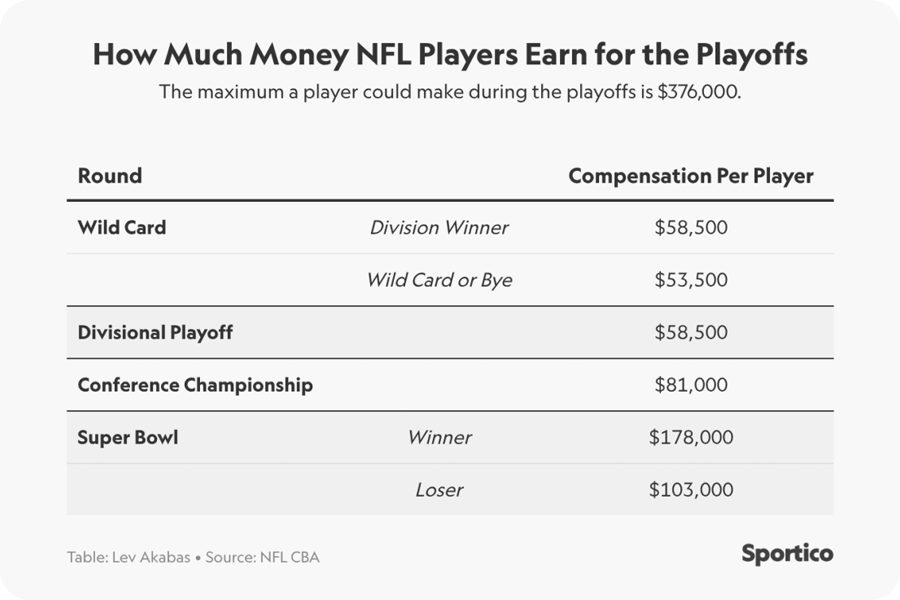
For context, a team that makes the Super Bowl will pay each player on its 52-man roster $376,000, totaling over $19.5 million. That’s not even including the millions in contract incentives that players and coaches are undoubtedly earning every round.
Pocket Change: To help offset some of these costs, the NFL does give playoff teams a weekly stipend to cover travel and stadium operations. And even though the home team does get to keep the $1M-$2M in revenue that’s generated from concessions and parking, that typically still isn’t enough to offset the costs of making a deep playoff run.
However, at the end of the day, it’s hard to complain as an owner when the league already pays you over $400M per year just for having a team.
📉 Biggest Loser
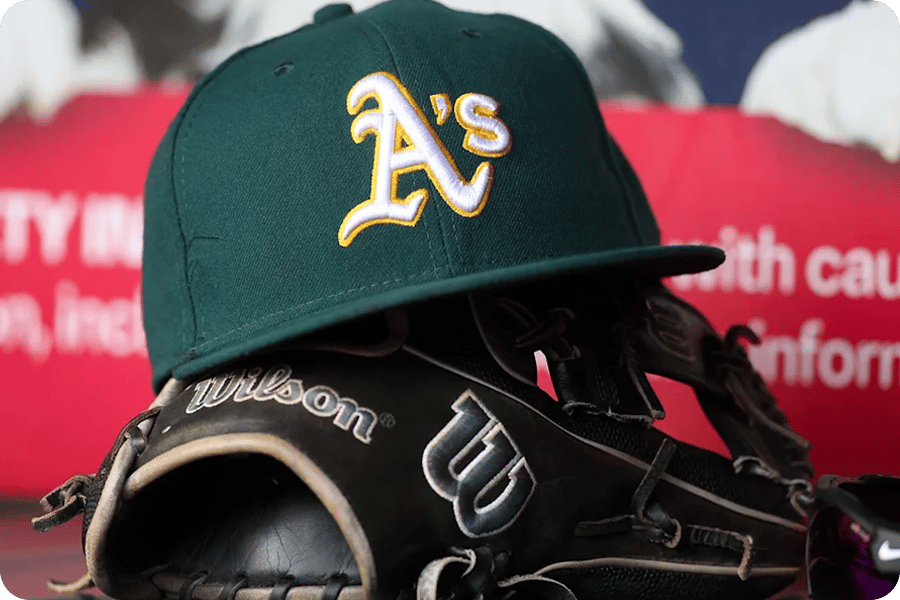
What the hell is going on with the Las Vegas A’s? Because recently, the U.S. Patent and Trademark Office denied the team’s request to trademark the names:
Las Vegas Athletics
Vegas Athletics
But the reason why is actually a lot more straightforward than you might think.
A’s Naming Rights: See, even though the A’s aren’t set to play a game in Las Vegas until 2028, the team has quietly been trying to obtain the trademark for its new name. The nickname “Athletics” dates back to 1901, when the franchise was founded in Philadelphia. And even though they’ve since moved to:
Kansas City (1955)
Oakland (1968)
The team has always managed to secure the “Athletics” trademark wherever they’re based. So why is this move any different?

Philadelphia Athletics (1901-1954), Kansas City Athletics (1955-1967), Oakland Athletics (1968-2024)
Too Generic: According to trademark attorney, Josh Gerben, the U.S. Patent and Trademark Office denied the team’s request because the name “Athletics, lacks distinctiveness.” This basically means that the name is too generic, at least from a legal standpoint, and could theoretically be used to describe any professional “athletics” organization located in Las Vegas.
But if that’s true, then how has the team secured this trademark for other cities in the past?
Well, according to legal experts, to trademark a name as generic as “Athletics,” you have to prove that consumers already associate the term with a specific source, which, in this case, would be the baseball team.
However, this is where attorney Josh Gerben says that the team is caught between a rock and a hard place, because without actually playing a game in Las Vegas, which the team isn’t slated to do for another two years, it’s going to be hard to prove through things like:
Ticket sales
Advertising
Merchandise sales
That fans already associate the term “Athletics” with the non-existent Las Vegas baseball team.
However, on the flip side, without securing the rights to the name, the franchise currently has no way to enforce its trademark against things like unlicensed merchandise sellers (which have already started popping up online).
So what can they do about it?
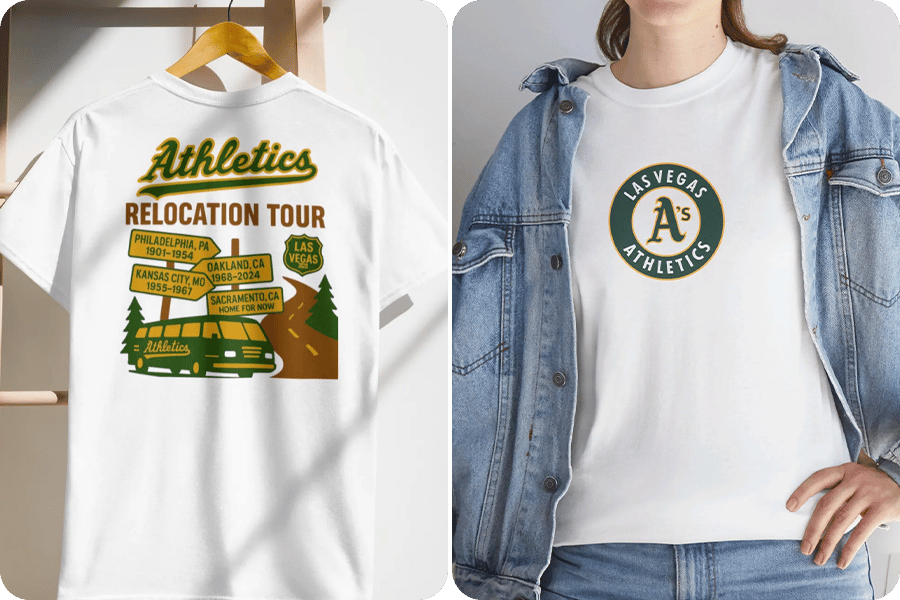
Unlicensed “Las Vegas Athletics” merch currently listed on Etsy
What’ll Happen: Major League Baseball is expected to ask the patent office for a 6-month extension to refile their application, during which they’ll have to figure out a way to convince the organization through things like media exposure or even fan surveys that when people hear the name “Las Vegas Athletics,” they’re thinking about the baseball team.
But until then, you have just as much of a right to sell “Las Vegas A’s” merch as the actual team does… do with that information what you wish.
This is not legal advice.
🏆 Winner’s Circle
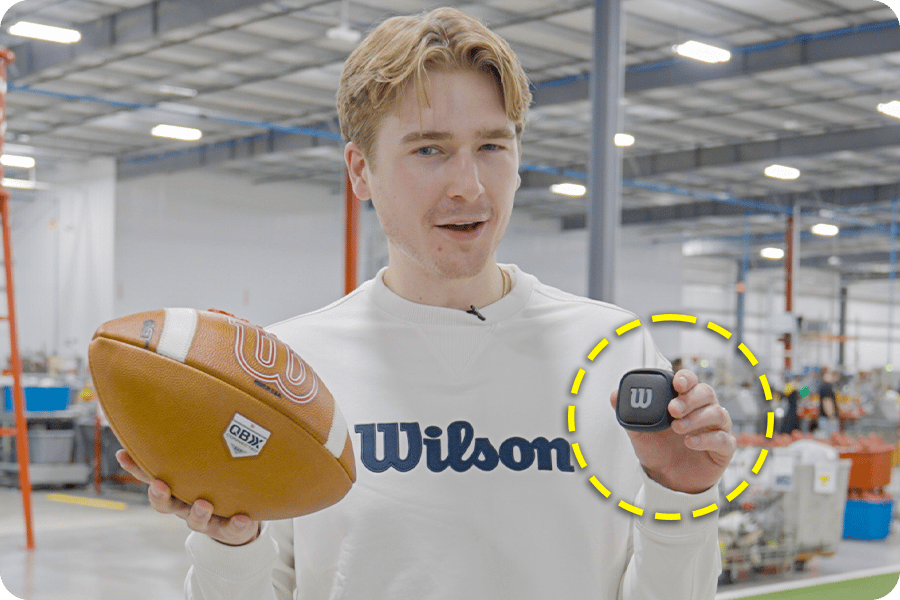
This is the most high-tech football ever created, and it’s all thanks to this small black box.
Wilson’s Smart Football: See, in 2016, Wilson launched the first-ever smart football. It used a quarter-sized Bluetooth sensor suspended in the center of the ball to connect to an app on your phone, where you could track things like distance, speed, and spiral efficiency on every throw.
And even though it started as a fun backyard toy for kids, engineers at the company quickly realized this technology could be used to analyze and evaluate quarterbacks' throws at the college and professional levels.
There was just one problem.
Originally, Wilson’s “smart football” could connect to only one Bluetooth device at a time. This meant that, for a college or NFL QB to use it in practice or a game, the same person would have to use and keep track of the same ball throughout the entire season.
That’s why, before releasing the newest version of their smart football, Wilson’s team of engineers created something called a “player tag”, and even though it just looks like a small black box, what it’s able to do is actually really cool.
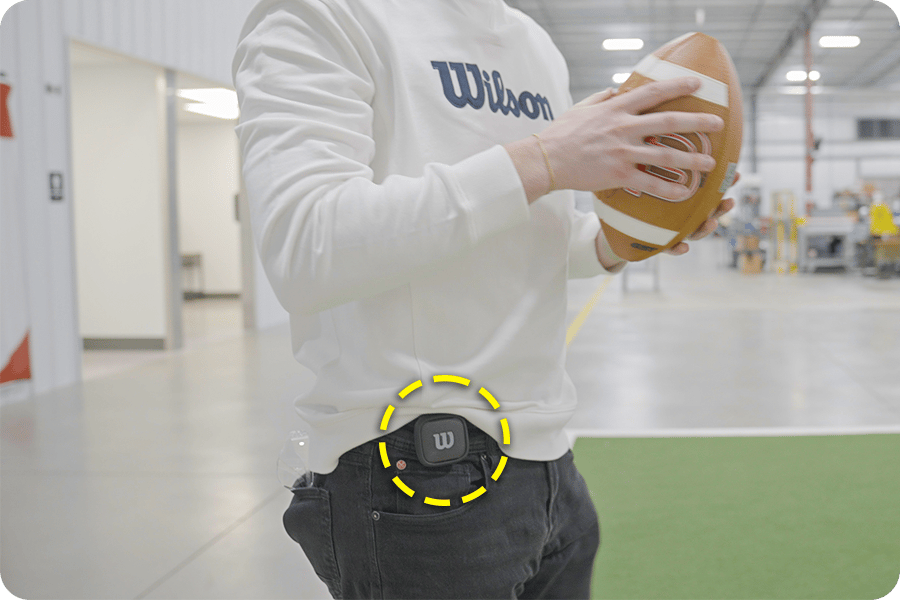
Updated Version: Meant to be worn on a quarterback's hip while throwing their new QBX ball, the “player tag” creates a 1-yard radius around whoever’s wearing it, so it only picks up the wireless signal from a ball thrown by that person. That way, I’m able to pick up and throw any QBX ball I want, and only the data from my throws is being recorded to my profile.
But that’s not even the coolest part.
Because if you’re playing catch with someone who’s also wearing one of these player tags, then their data is also being collected as you throw the same ball back and forth.
You can imagine how helpful this would be in practice or even a game, because as dozens of different balls are being used at a time, this player tag ensures that you’re only collecting the data from your own throws.
If you want to see my full test of this new ball, including an inside look at how every NFL, college, and high school football gets made - make sure you’re subscribed to my YouTube channel (video drops Saturday, January 17th).
⏱️ In Other News
When you refer new readers to the Bottom of the Ninth, you win exclusive prizes.

➡️ Here is your unique link to share: https://bottom-of-the-ninth.beehiiv.com/subscribe?ref=PLACEHOLDER
You’re currently at 0. That’s only 1 away from receiving a Bottom of the Ninth Sticker!
*Please do not use fake email addresses — they will not qualify as referrals. Thank you!
👋🏻 Happy Friday!
I’ve recently had the chance to interview two of my favorite creators: Riley Martin (@_sportsball) and Jack Appleby (@howtohoopforver). I didn’t mean for our conversations to go like this, but I took away some incredible advice from each guy.
Here’s what I’m sitting with this weekend:
From Riley:
“I kind of feel like what I’m getting at is having confidence in the skill set. I feel like the data storytelling stuff I do is in itself valuable. I think companies like it. Like I could go work on a strategy team at a company and these are board presentations in other universes, right?
I think that’s something I recognize, and yeah, I just feel comfortable that I could translate these skills elsewhere. And I’m getting better at it.”
My takeaway: The skills we’re honing as creators are valuable, remember that.
From Jack:
“I think trying to win as a source of information is incredibly hard. I think trying to win around, am just intrinsically interesting is very hard… And I think the reason I’ve been able to grow in the sports world so quickly is I have perspectives, I have ideas, people know what I stand for.”
My takeaway: To win as a creator in 2026, you need a unique POV and have to communicate it with the world.
Reply