- Bottom of the Ninth
- Posts
- ✏️ Why the Future of Sports Media is... Drawing?
✏️ Why the Future of Sports Media is... Drawing?
How Riley Martin (@sportsball) built a business with clarity and colored pencils

Tyler Webb
January 14, 2026
In partnership with


Happy Wednesday,
Sports content isn’t changing because fans suddenly want more information. It’s changing because there is simply more of everything:
More clips
More opinions
More data
More pressure to react quickly.
And that’s the environment where Riley Martin has found his lane.
Riley is the creator behind Sportsball, a page built around hand-drawn sports data visualizations. Instead of reacting to every headline or trying to outpace traditional media, his work focuses on explaining one idea at a time in a way that makes sense to people who do not already speak the language of sports analytics.
This week, Jake and I sat down with Riley to talk about his creative process, how he chooses topics, and why clarity has turned into a real business advantage.
Stay One Scoop Ahead of the New Year

The new year is the perfect time to build healthy habits that actually stick. AG1 helps you stay one scoop ahead of the new year by supporting energy, gut health, and filling common nutrient gaps, all with a simple daily routine.
Instead of chasing resolutions that are hard to maintain, AG1 makes health easier. Just one scoop each morning supports digestive regularity, immune defense, and energy levels, making it one of the most effortless habits to keep all year long. A fresh year brings fresh momentum, and small daily habits can make a meaningful difference.
Start your mornings with AG1, the daily health drink with 75+ ingredients, including 5 probiotic strains, designed to replace a multivitamin, probiotics, and more, all in one scoop.
For a limited time only, get a FREE AG1 duffel bag and FREE AG1 Welcome Kit with your first AG1 subscription! Only while supplies last. Get started today.
5 Takeaways From Our Conversation With Riley Martin

Riley Martin and his wife, Claire
1. He designs content for casual fans, not experts
Riley is explicit about who he’s talking to. He’s not trying to impress hardcore fans or debate rankings; he’s trying to make sports easier to follow.
As he explained, he thinks about his audience as someone who “watches sports very casually” and may not know the terminology or context ahead of time. His goal is to give them just enough understanding to engage.
In his words, the work is about “bringing them up to speed on one simple idea” rather than overwhelming them with information.
2. Topic selection matters more than speed
Riley doesn’t chase every trending topic, and he doesn’t feel pressure to react immediately. He looks for ideas that can be explained clearly through a single visual.
He described his process as more free-flowing, saying, “I don’t have a real intense template… It’s more like, what’s the logical next question, and how do I answer it?”
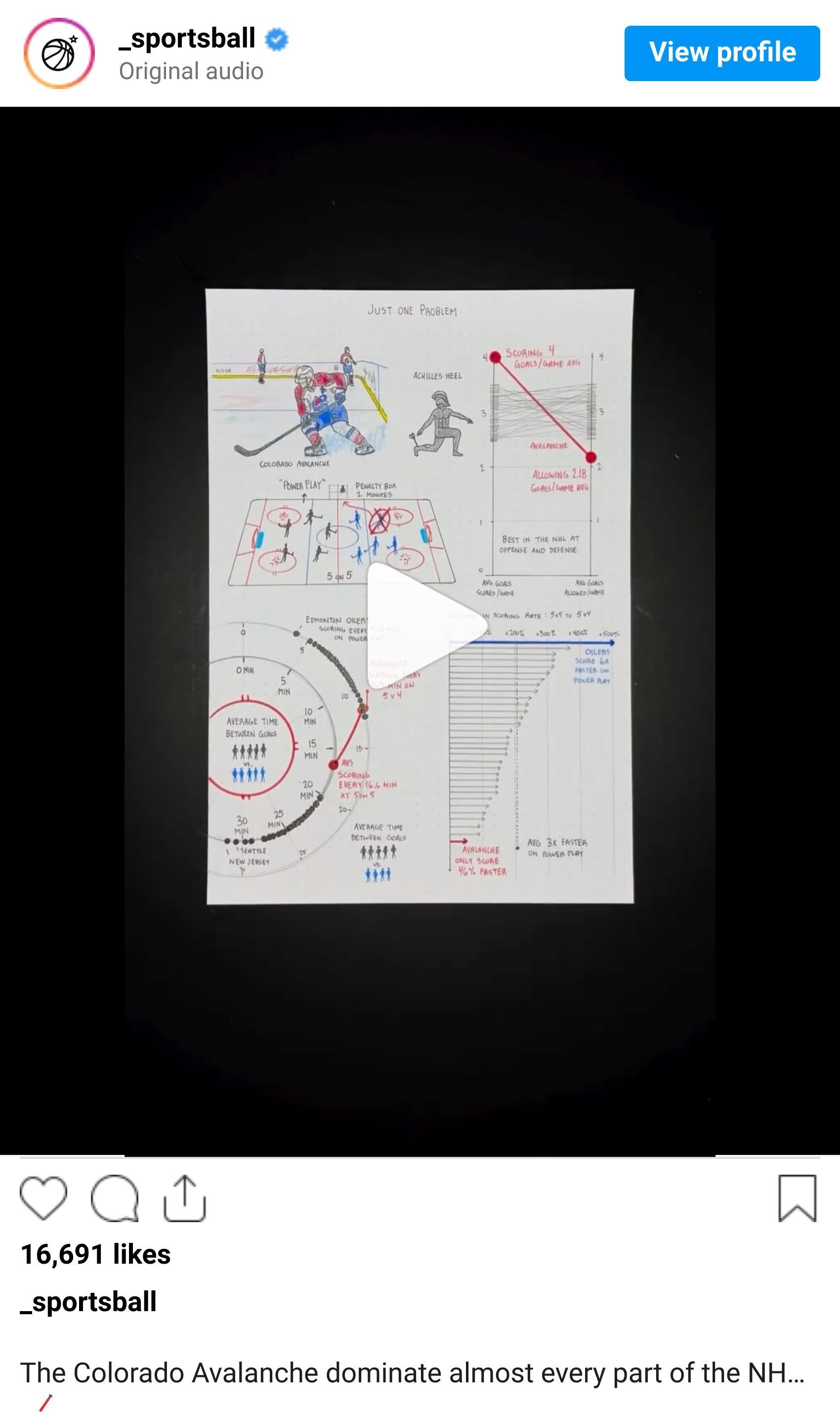
That approach leads to a mix of topics, including:
League-wide trends
Single-team issues
One-off questions he finds interesting
As Riley put it, “That randomness is kind of fun too,” and it keeps both him and the audience engaged.
3. The value is in how the data is shown
Riley’s background is in analytics and presentations, which shaped how he thinks about information. He doesn’t believe the problem is access to data; it’s in how it’s communicated.
He talked about early jobs where creative presentation was discouraged, and the expectation was to simply show the numbers. Sportsball exists because he believes visuals are not decoration, but the product itself.
When asked how he explains his work, the simplest version stuck: “I draw data visualizations for sports brands, and they pay me.”
4. He doesn’t obsess over performance after posting
Riley shared advice he gives to other creators that he also follows himself. His recommendation is to make something you’re proud of, post it, and move on.
He said, “If you keep making stuff you’re proud of and you keep getting better at it, that is enough to bring in the viewership eventually.”

That doesn’t mean ignoring feedback entirely, but it does mean avoiding constant overcorrection based on short-term results.
5. The business works because he stays focused
Riley didn’t quit his job overnight or force a big pivot. His newsletter came first, the visuals grew alongside it, and brand work followed naturally.
Even now, he’s clear about where his time is best spent. He knows newsletters matter, but he also knows his strength is visual storytelling. Rather than trying to do everything, he’s stayed focused on what he’s best at.
That focus has kept the business manageable and sustainable.
Why It Matters
Sports media doesn’t have an information problem; it has an explanation problem.
Riley’s work shows that there is real value in slowing down, choosing fewer topics, and explaining them clearly. As attention gets harder to earn, creators who prioritize clarity over volume may end up building more durable audiences and businesses.
📩 And don’t forget: Bottom of the Ninth is back this Friday with the top three stories in sports and business from the week.
See you then,
Tyler & Jake
Reply